
Coloring Games: Color & Paint review
 Analysis by GetAllApps
Some coloring games keep the appeal simple: choose a picture, add color, and enjoy the result. Coloring Games: Color & Paint builds its appeal around that familiar activity while presenting itself as an educational game for children. Its store summary pairs coloring with color learning, painting, neon drawing, and educational games, so there is more to the idea than filling in a single page and calling it a day. I like that approachable mix: it gives young players an easy first action, then a reason to explore another kind of creative activity.
From the first tap to a finished picture
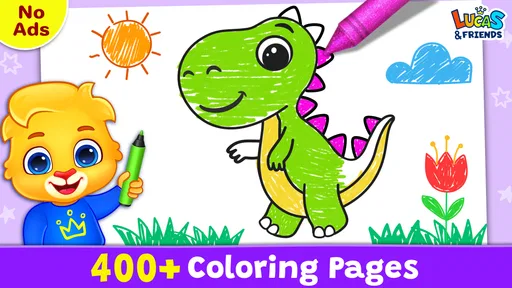
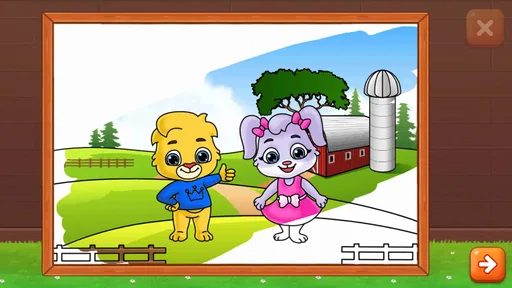
The opening appeal is immediate. A child can approach a coloring book without needing to understand a complicated objective: look at a picture, choose a color, and start painting. That straightforward action is a good fit for a kids’ game because it puts creativity ahead of instructions. Parents looking for a coloring game for kids will recognize the familiar format, while children can get to the enjoyable part quickly.
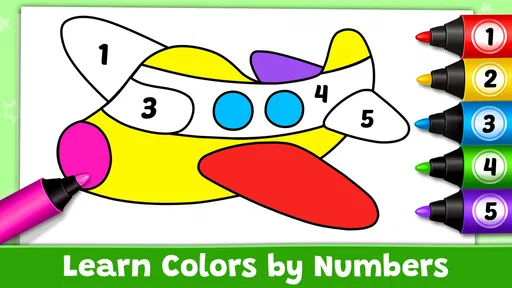
Coloring Games: Color & Paint is designed as more than a traditional digital coloring book. Its short description is simply “Coloring Games,” while its fuller store summary points to learning colors, painting, neon drawing, and educational games. Those elements suggest a collection of related creative activities, rather than one narrow exercise. The common thread is hands-on exploration: a child interacts with color and sees an image take shape.
That interaction gives the game a naturally understandable action-and-feedback rhythm. The child makes a choice, applies color, and sees the picture change. There is no need for a long explanation to make the connection clear. For younger players in particular, this immediate visual response can make an activity feel inviting and encourage them to try another color or continue working on the picture.
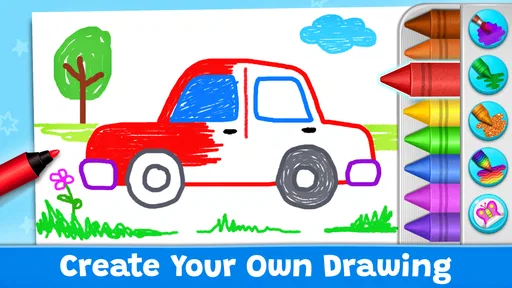
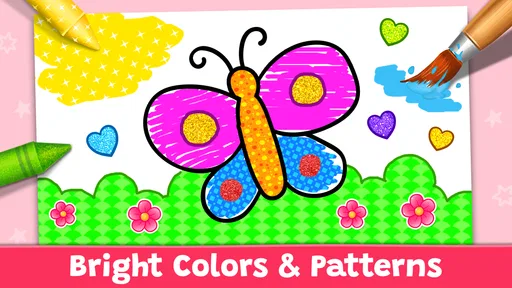
I also appreciate how naturally the painting activity can suit different moods. A child might want to concentrate on coloring a picture, experiment with a brighter look through neon drawing, or simply enjoy choosing colors. The different creative directions make the central idea feel flexible without changing its basic appeal. It remains an accessible educational coloring game built around visual play.
A gentle learning angle
The educational element is rooted in the activity itself. Learning about colors can happen through choosing and applying them, making the idea feel connected to play instead of presented as a separate lesson. That distinction matters: children are more likely to stay engaged when they can explore at their own pace and see what their choices do.
Of course, a coloring activity is not a substitute for every kind of learning. Its strength is more modest and practical: it gives children a creative setting in which colors are part of the experience. The combination of a coloring-book format and color learning makes the app easy for families to understand, even before a child begins exploring its painting and drawing themes.
Feedback that keeps the activity moving
The satisfaction of a coloring game comes from seeing a choice turn into a visible result. A patch of color changes the look of a picture, and that small response can be rewarding all by itself. The player does not need to wait for a complicated outcome; the creative feedback is part of the action. That helps keep the experience approachable for children who are still learning how to use a game on a screen.
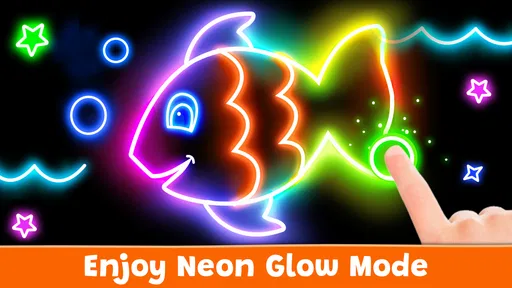
Neon drawing adds another creative flavor to the mix named in the game’s summary. It broadens the idea beyond conventional coloring and offers a different way to think about making marks and using color. I find that variety useful in principle: when the central activity is creative expression, an additional style can give a child a fresh reason to return without making the whole experience harder to understand.
The best kind of feedback here is not a score or a contest. It is the picture changing as the child works on it. That makes the reward personal: the player can enjoy the colors they picked and the image they helped create. For a kids’ painting game, that kind of direct response supports experimentation, since trying a new color is itself part of the fun.
Why the reward feels personal
Finishing a picture can provide a natural sense of completion. The child has made a series of small choices and can look at the resulting image as something they worked on. The reward is therefore both visual and creative: the finished page reflects the player’s decisions, rather than a result delivered by the game without their participation.
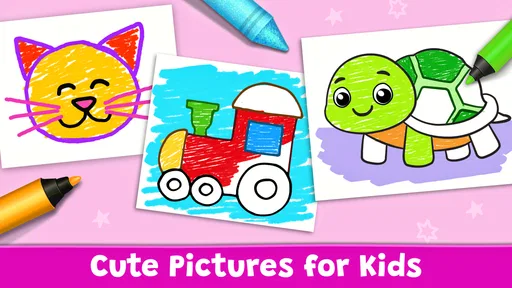
That sense of ownership is one reason coloring can hold a child’s attention. The same image can feel different depending on the colors used, and the activity invites individual choices rather than insisting that every player produce an identical result. The game’s broader emphasis on painting and neon drawing reinforces that creative focus. It is a pleasant fit for a family seeking creative games for children that are easy to approach.
The game is free, and it is rated for Everyone. Those details make its basic proposition straightforward for families considering an age-appropriate creative game. Its popularity is also substantial: it has passed 100 million installs and holds a 4.4 average from around 122,000 ratings. I see that as evidence that the coloring-and-painting concept has reached a broad audience, though the most important question for a family remains whether this style of play suits their child.
Starting again without starting over
A useful creative game needs a comfortable stopping point and an easy reason to begin again. Coloring naturally supplies both. A child can pause after working on a picture, then return later or move on to another creative activity. A new session does not have to feel like repeating a challenge; it can simply mean making a different set of choices or exploring another kind of coloring and drawing.
This is where the game’s range of themes helps its core loop. The basic action stays familiar—work with color and create—but the mention of painting, neon drawing, and educational games gives the experience more than one creative direction. That variety can refresh the activity when a child is ready for a change, while keeping the central interaction easy to grasp.
Resetting is also part of the appeal of coloring itself. A child can finish one creative moment and begin another without needing to master a complex system first. That low-pressure structure is valuable for short play sessions, especially when a parent wants an activity that is easy to pick up and put down. The game’s concept supports returning for another burst of creativity rather than demanding a long commitment.
Who may enjoy it most
Coloring Games: Color & Paint is most naturally suited to children who enjoy pictures, colors, and making things on a screen. Its educational framing may also appeal to parents who want play to have a learning-related angle, while the painting and neon drawing themes add creative variety to the basic coloring-book idea. Because the central action is visual and straightforward, it is easy to see why the game can appeal to a young audience.
It may be a less compelling choice for someone seeking a fast-paced game with demanding goals or a competitive structure. The appeal here is quieter: choose, color, watch the image change, and enjoy the result. That is not a drawback so much as a clear identity. Families shopping for action-heavy gameplay should look elsewhere; families after coloring games for children will find the concept much closer to what they want.
The game comes from RV AppStudios and was released on November 6, 2019. It has collected around 1,100 reviews as well as its much larger pool of ratings. Taken together with its broad install reach, those figures show that it has remained a familiar option in the children’s coloring-game space. They do not change the basic experience, but they help explain why parents may encounter it while browsing for a creative app.
My verdict on the play loop
The loop is easy to describe and easy to appreciate: take an image or drawing activity, make a color choice, see the visual feedback, enjoy what you created, and return when you feel like making something else. The reward comes from the child’s own decisions, while the reset is gentle because a fresh session can mean a fresh creative attempt rather than a demanding restart. That simplicity is the game’s clearest strength.
I think Coloring Games: Color & Paint makes the most sense for families who value calm, accessible creative play. Its combination of a coloring-book foundation with color learning, painting, neon drawing, and educational themes gives children several ways to engage with the same broad idea. The experience is not trying to turn coloring into a complicated challenge; instead, it makes the act of creating the main attraction.
Overall, Coloring Games: Color & Paint is a friendly choice for children who enjoy making pictures and experimenting with color. Its simple action, immediate visual response, and natural sense of completion make it easy to understand why another session might begin: there is always the pleasure of creating something in a different way. For parents looking for a free, Everyone-rated educational game for kids centered on coloring and creative expression, it is an appealing option to consider.
Pros and cons
Pros
- Simple controls make coloring easy for younger players.
- A broad palette encourages experimentation with color combinations.
- Offline play makes it suitable for travel without internet access.
- Finished pictures provide a satisfying sense of completion.
- Short sessions work well for casual play.
Cons
- Some pictures or tools may require payment to unlock.
- Frequent ads can interrupt coloring sessions.
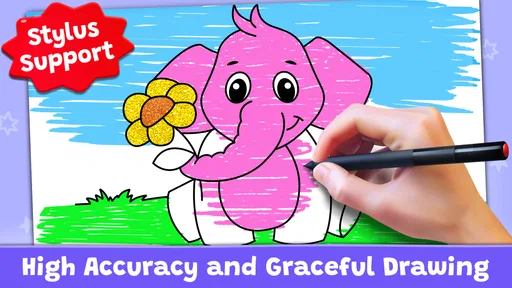
- Small details may be difficult to color accurately on phones.
- The activity may feel repetitive after extended play.
- Young children may need help navigating menus and settings.


